B1Room guide
Pantry storage bins: zone it, contain it, label it
The short answer
Zone the pantry by how often you reach: everyday food at eye level, snacks lower, heavy and bulk on the floor, backstock up top. Then contain each category: airtight canisters for loose staples, clear open-front bins for packets, and a label on every one.
How should you organize a pantry with bins?
Organize by zones before buying anything. Put the food you use daily at eye level, children's snacks where they can reach, heavy cans, drinks and bulk bags low, and backstock and rarely used items on the top shelf. Then give each category one bin or canister, so everything has an address.
Set up a pantry with bins in five steps
- 1
Empty and sort
Take everything out, check dates, and group like with like: breakfast, baking, grains, snacks, cans, sauces.
- 2
Map the zones
Everyday items at eye level, snacks at children's height, heavy and bulk low, backstock and rarely used things up top.
- 3
Measure each shelf
Inside width, depth and the height between shelves. Pantry shelves are often deeper than they look.
- 4
Contain by category
Airtight canisters for loose staples, clear open-front bins for packets, a riser or turntable for cans and jars.
- 5
Label and keep a backstock rule
Label every bin and canister. Keep spare packs up top, and move one down only when the bin below runs out.
Which pantry bin should hold what?
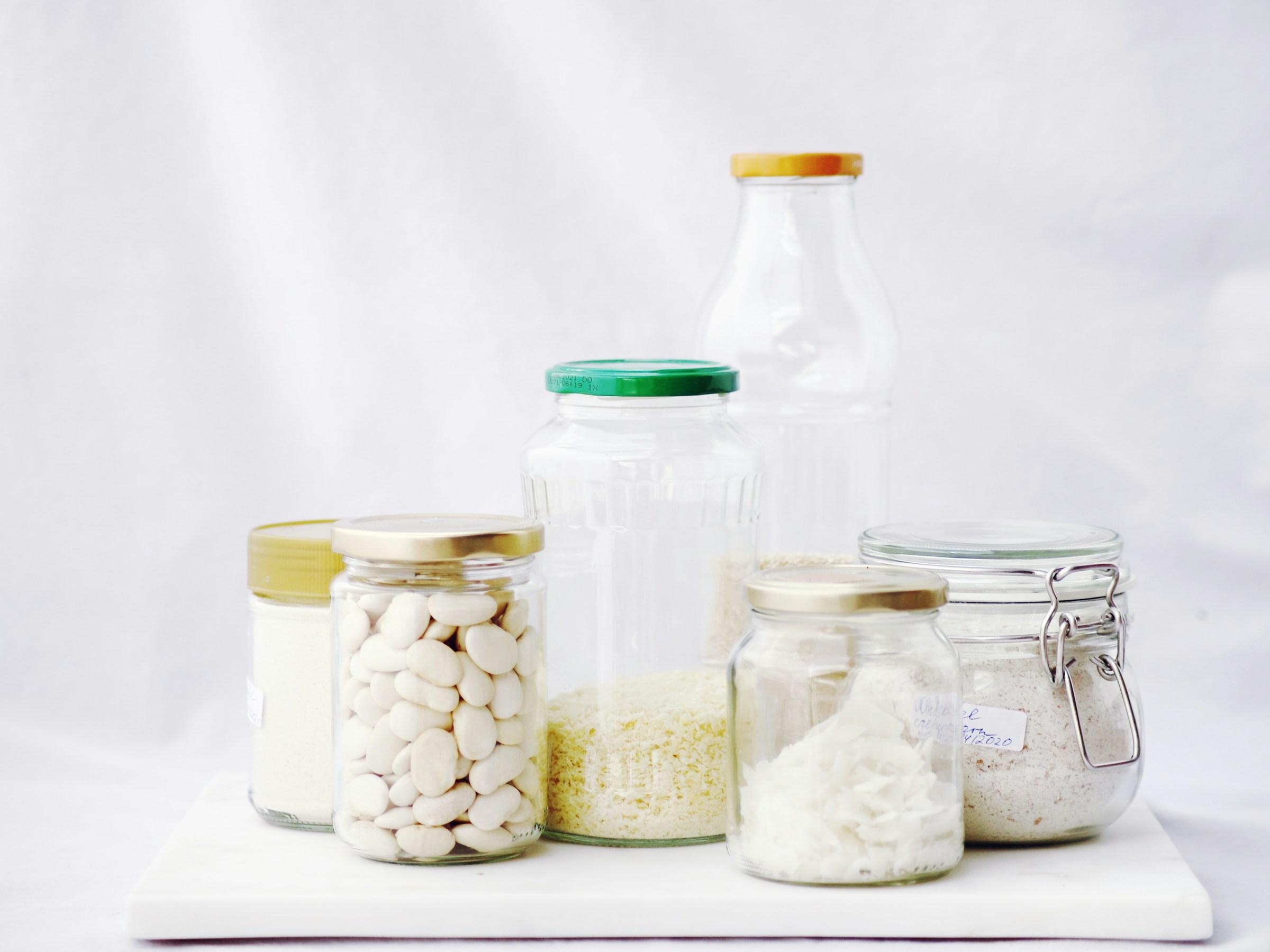
Match the container to the food. Loose staples go in airtight food containers; packets and snack bags go in clear open-front bins; cans and jars sit on risers or turntables; produce that likes air goes in wire or wicker baskets. Anything heavy lives low, in a sturdy bin you can slide out.
| Food | Container | Why |
|---|---|---|
| Rice, oats, pasta, flour | Airtight food canister | Fresher, pest-resistant, see the level |
| Snack packets, bars | Clear open-front bin | Grab without lifting the bin out |
| Cans and jars | Riser or turntable | Back rows become visible |
| Onions, potatoes | Wire or wicker basket | Airflow, kept dark |
| Backstock, bulk | Lidded tote, top or floor | Out of the way until needed |
Specialty stores such as The Container Store, and Target’s Brightroom range, sell clear stacking and open-front pantry bins; kitchen makers like OXO sell airtight canisters. Check that anything holding loose food is sold for food storage: see food-safe storage containers.
How do you organize a small pantry or cupboard with bins?
Use height and doors. Add a shelf riser to split tall gaps, an over-the-door rack for spices and small jars, and narrow bins that pull out like drawers on deep shelves. Choose fewer, larger categories so every bin earns its place, and keep backstock somewhere else if space is tight.
How do you keep a pantry organized?
Give the system ten minutes after each big grocery shop: put new items behind old ones, refill canisters only when they are empty, and move one pack down from backstock when a bin runs low. Labels that say what belongs in each bin are what keep everyone else in the house on the same page.
Read next: how to label storage bins and the bin size calculator to check what fits your shelves.
Should pantry bins be clear or woven baskets?
Clear bins win on function: you see what is running low without pulling anything out, and they wipe clean. Woven baskets win on looks and suit open pantries where packaging would look busy. A common compromise is clear bins for food you restock often and baskets for bulky or backup items, all with labels.
Frequently asked questions
Clear plastic bins with open or cut-away fronts for packets and snacks, airtight food containers for loose staples, and a few wire or wicker baskets for produce that likes air, such as onions and potatoes. Clear walls let you see what's running low without pulling everything out.
Close to the shelf's depth minus an inch or so, so nothing hides behind the bin and it doesn't stick out. A deep bin you can pull forward like a drawer turns a deep shelf into usable space. Measure each shelf, because depths often differ within one pantry.
No. Decant staples you buy in bulk and use often, like rice, oats and flour, into airtight food containers. Leave cans, sauces, spices and anything with cooking instructions in their packaging. Decanting everything takes time and makes it easy to lose best-by dates.
Sources
- 1.Food Packaging & Other Substances that Come in Contact with Food: Information for ConsumersU.S. Food and Drug Administration
- 2.POP Container 3-Piece Set (product page)OXO
- 3.Storage and Elfa rangesThe Container Store
- 4.Put Everything in Its Bright Place with Target's First Home Organization Owned Brand, BrightroomTarget Corporation, January 2022
Sources checked . Product ranges change, so confirm sizes and specs with the maker before you buy. We are independent and no company named pays us. Read the disclaimer or how we check facts.